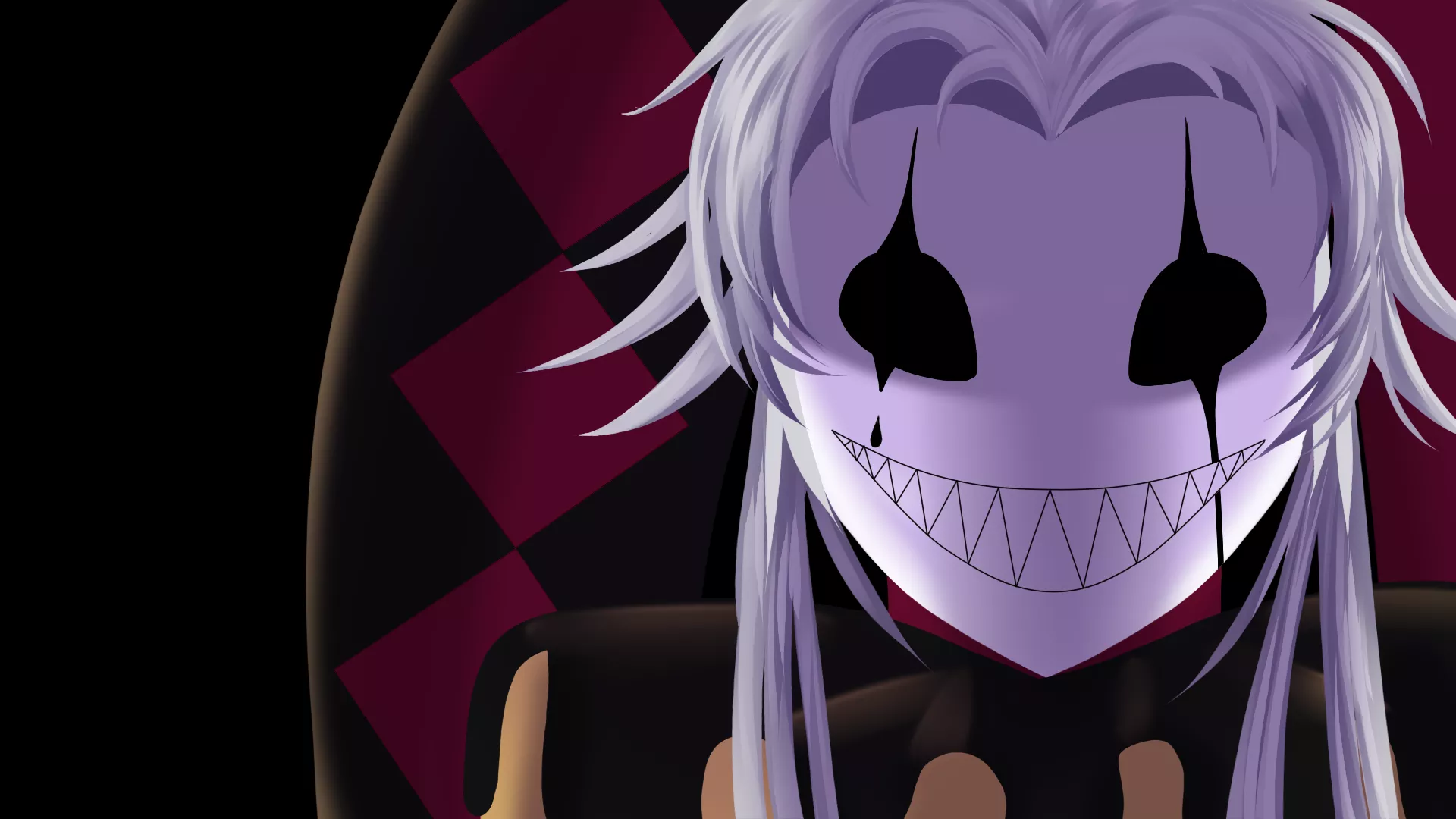
The HORRIFYING Truth of The Freak Circus
Who is Pulling the Strings?
Everyone in The Freak Circus is a puppet. Pierrot dances to someone's tune. Harlequin performs for someone's amusement. Even the Ringmaster answers to a higher power. But who — or what — sits at the top of the chain?
🎭 The Hierarchy of Control
The Freak Circus operates on a strict hierarchy of power. Understanding who controls whom is essential to understanding the game's true horror.
Level 1 — The Entity (Unknown)
The nameless force behind the Pact. It created the rules of the curse and feeds on emotional energy. It is never seen, never named, never directly referenced — only felt. The Entity is the circus itself.
Power: Absolute — defines the rules of existence within the circus
Level 2 — Teresa / The Ringmaster
The original pact-maker. She traded her name for the power to sustain her circus. Now she's its warden — maintaining the cycle, greeting visitors, orchestrating confrontations. She has authority over performers but is bound by the Entity's rules.
Power: Administrative — can direct but not override the curse
Level 3 — Harlequin (Co-Founder)
As one of the original performers who participated in the founding, Harlequin has unique privileges. He can manipulate the circus's layout, create illusions, and partially resist Teresa's commands. But he cannot leave.
Power: Partial — can bend the rules but not break them
Level 4 — Senior Performers
Pierrot, the Doctor, Jester, Bil. Long-term residents who have adapted to the curse. They have limited autonomy within their assigned roles but cannot deviate from their 'character.'
Power: Limited — must perform their assigned function
Level 5 — Transformed Visitors (Clowns)
Carol and others who were absorbed into the circus. They have no autonomy, no memory, and no identity. They perform menial roles and can be 'consumed' if the circus needs energy.
Power: None — puppets in the literal sense
Level 6 — Phantom Audience
Failed transformations. Awareness without agency. They can see everything but do nothing. The cruelest fate in the hierarchy.
Power: Negative — they exist only to suffer
👑 Teresa: The Tragic Puppet Master
Teresa is simultaneously the most powerful and most tragic figure in the circus. She made the Pact to save her family of performers — not to imprison them. The Entity twisted her wish into something monstrous, and now she's forced to watch the people she loved become less human with each passing century.
What Teresa Can Do:
- ✓ Direct performers to interact with visitors
- ✓ Control the circus's physical layout
- ✓ Grant limited autonomy to cooperative performers
- ✓ Leave hidden clues for clever visitors (text fragments, Morse code)
What Teresa Cannot Do:
- ✗ Break the curse herself
- ✗ Free any performer or visitor
- ✗ Refuse new visitors entry
- ✗ Override the Entity's fundamental rules
- ✗ Reveal her identity directly (she must be discovered)
The Ringmaster's Tears hidden scene — the rarest in the game — is the only time Teresa shows her true self. When you call her by name and ask "Why did you do this?" instead of condemning her, she breaks down. The mask cracks. The woman beneath is exhausted, guilt-ridden, and desperate for someone to finally understand that she never meant for any of this to happen.
⬛ The Entity: The Thing Behind the Curtain
The Entity is never seen, never named, and never directly interacts with the player. Yet it is the single most powerful force in the game. Everything — the curse, the transformations, the emotional feeding, the cycle — is the Entity's design.
What we know about it comes from scattered sources: Teresa's diary, Jester's allegorical play, and the Truth Ending's meta-narrative. Pieced together, a picture emerges of something ancient, patient, and fundamentally alien in its motivations.
What is it?
Unknown. It predates the circus by millennia. It may be a concept rather than a creature — the personification of loneliness, addiction, or the human need for connection twisted into something predatory.
What does it want?
Emotional energy. The circus is a farm. Visitors generate intense emotions — love, fear, hope, despair — and the Entity feeds on all of them. The stronger the emotion, the more it consumes.
Why the circus specifically?
Performance art is uniquely suited to generating concentrated emotion. A circus is a space designed to provoke wonder, fear, and delight simultaneously. The Entity chose the form that maximizes emotional output.
Can it be destroyed?
The Truth Ending's 'Liberation' path suggests the Entity can be starved — if every soul in the circus simultaneously lets go of their attachments. But this requires the cooperation of beings who have been emotionally broken for centuries.
The Uncomfortable Answer
So who is really pulling the strings? The Loop ending provides the most uncomfortable answer: you are.
Jester's final monologue in the Loop ending addresses the player directly: "You came for the show. You watched them suffer. You chose who to love and who to condemn. And when it was over, you started again. You're not the hero of this story. You're the audience. You're the Entity."
The meta-narrative suggests that the Entity isn't a supernatural being at all. It's a metaphor for the player's consumption of fictional suffering. We play horror games, romance games, and tragedy games because they generate intense emotions — and we consume those emotions for entertainment. Every playthrough feeds the cycle. Every restart condemns the characters to repeat their trauma.
The one pulling the strings was always the one holding the mouse.