They Aren't Just Clowns...
The SICK Secret Behind The Freak Circus
On your first playthrough, the performers of The Freak Circus look like eccentric entertainers in elaborate costumes. By your third playthrough, you realize something deeply wrong: those aren't costumes.
🤡 The Costume Isn't a Costume
The first clue comes early — if you know where to look. During the café prologue, when Pierrot is harassed by the rude customer, the customer grabs his collar and Pierrot flinches in pain. Not embarrassment. Pain. As if the customer had grabbed his skin.
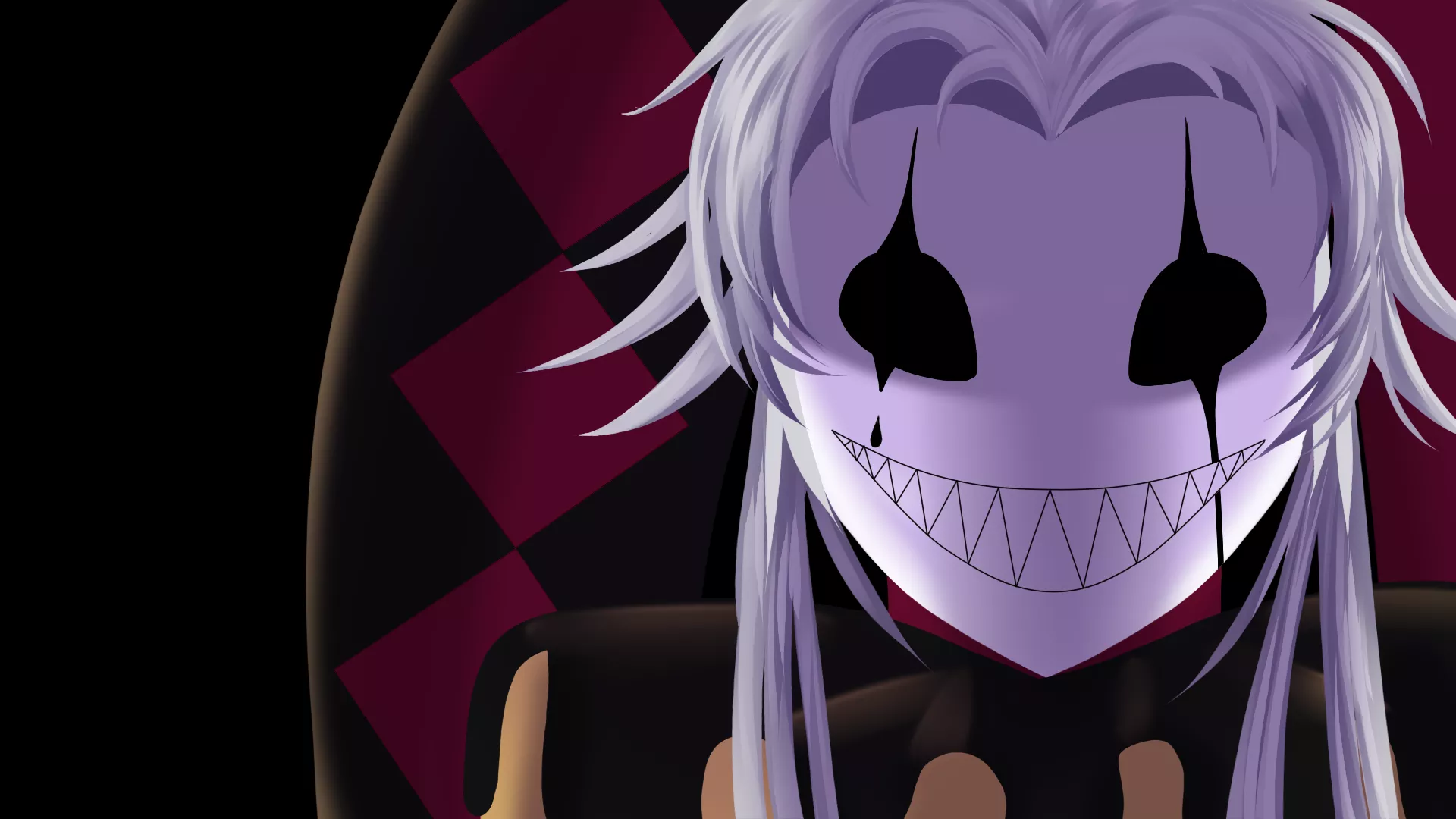
Then there's Harlequin's mask. In his True Ending, the mask cracks — not like porcelain, but like chitin. Beneath it, you catch a glimpse of what looks like human skin, but textured wrong. Too smooth. Too pale. Like skin that's been sealed under something for centuries.
The Implication
The curse didn't give the performers costumes. It transformed their bodies. Pierrot's white face isn't makeup — it's his actual skin, bleached by centuries of the curse. Harlequin's diamond patterns aren't painted on — they're growths, fused to his face like scales. The "costumes" are their bodies, slowly warped by the Entity's magic into living caricatures of their performer roles.
The Evidence
Pierrot
- •His tears are described as 'falling from his face like pearls' — literally hard, crystallized drops
- •When touched, his skin is described as 'cold, like porcelain' — not simile, but literal description
- •In his True Ending, color returns to his face for the first time. The text says 'warmth spread across his cheeks like paint bleeding into white canvas' — his skin is changing material
- •The bad ending title — 'The Porcelain Doll' — isn't metaphorical. He turns you INTO one
Harlequin
- •His laugh is described as 'coming from somewhere deeper than his throat' — his vocal cords have changed
- •The mask crack in his True Ending reveals skin, but Harlequin reacts with pain — the mask is fused to him
- •His movements are described as 'impossibly fluid, like a puppet without strings' — his joints don't work like human joints anymore
- •When he consumed Columbina, the game implies he literally absorbed her — his green eyes may contain fragments of her
The Doctor
- •His hands are described as 'surgical instruments themselves' — his fingers may have become metallic
- •He never blinks during any scene — verified by frame-by-frame analysis
- •His 'treatments' involve touching patients. The game describes his touch as 'sharp, precise, cold' — scalpel-like
- •In the Doctor's Cure ending, he 'fixes' you by removing your emotions — the same way the curse removed his humanity
Jester
- •He is the only performer whose appearance seems 'normal' — because his transformation is internal
- •His 'madness' isn't madness — it's the weight of remembering every cycle while his mind warps to accommodate millennia of memory
- •His bells don't just jingle — they 'sing' according to the text. They may be organic growths that produce sound
- •In the Loop ending, Jester addresses you directly. His face changes for the first time — his smile becomes fixed, like it's carved
💀 What Happens to New Visitors
The transformation isn't instant. It's a slow, irreversible process that begins the moment you enter the circus:
Stage 1 — Entry
ImmediateYou feel disoriented. Time feels 'different.' Colors seem more vivid. This is the circus's dimension beginning to affect your perception.
Stage 2 — Acclimation
Day 1You start forgetting details about the outside world. Names become fuzzy. The café feels like a distant dream. The circus begins to feel like 'home.'
Stage 3 — Bonding
Day 1-2Your emotional attachment to a performer deepens unnaturally fast. The affection system isn't just tracking feelings — it's tracking the curse's grip on you.
Stage 4 — Manifestation
Day 2In both True Endings, your character notices 'changes' — seeing the phantom audience, feeling time differently, sensing the circus's emotions. Your body is beginning to adapt.
Stage 5 — Transformation
PermanentIf you stay (True Ending) or are trapped (Bad Ending), the transformation continues indefinitely. Carol is Stage 5 — she barely resembles herself anymore.
👤 The Phantom Audience: The Failed Transformations
The shadowy figures that fill the audience aren't ghosts. They're incomplete transformations. Visitors who didn't bond strongly enough with a performer to become a full circus member, but stayed too long to leave unchanged. They exist in a horrifying middle state:
- • They have form but no features — their faces smoothed away by the incomplete curse
- • They can watch but cannot interact — awareness without agency
- • On NG+, their silhouettes include shapes matching your previous player characters
- • They grow in number with each cycle — the audience gets larger every playthrough
The most disturbing detail: in the Loop ending, Jester gestures at the phantom audience and says, "They came for the show too. Just like you."
Why This Changes Everything
Understanding the body horror recontextualizes every interaction in the game. When Pierrot offers you his hand, he's not extending a gesture of friendship — he's offering you a glimpse of what you'll become. When Harlequin asks you to dance, he's testing whether your body can still move freely — because his can't.
The "romance" of The Freak Circus isn't a love story. It's a transformation narrative disguised as one. Every "I love you" is also "I accept losing my humanity." And the truly sick part? The game makes you want to say it anyway.
They aren't just clowns. They're what's left of people who once looked exactly like you.