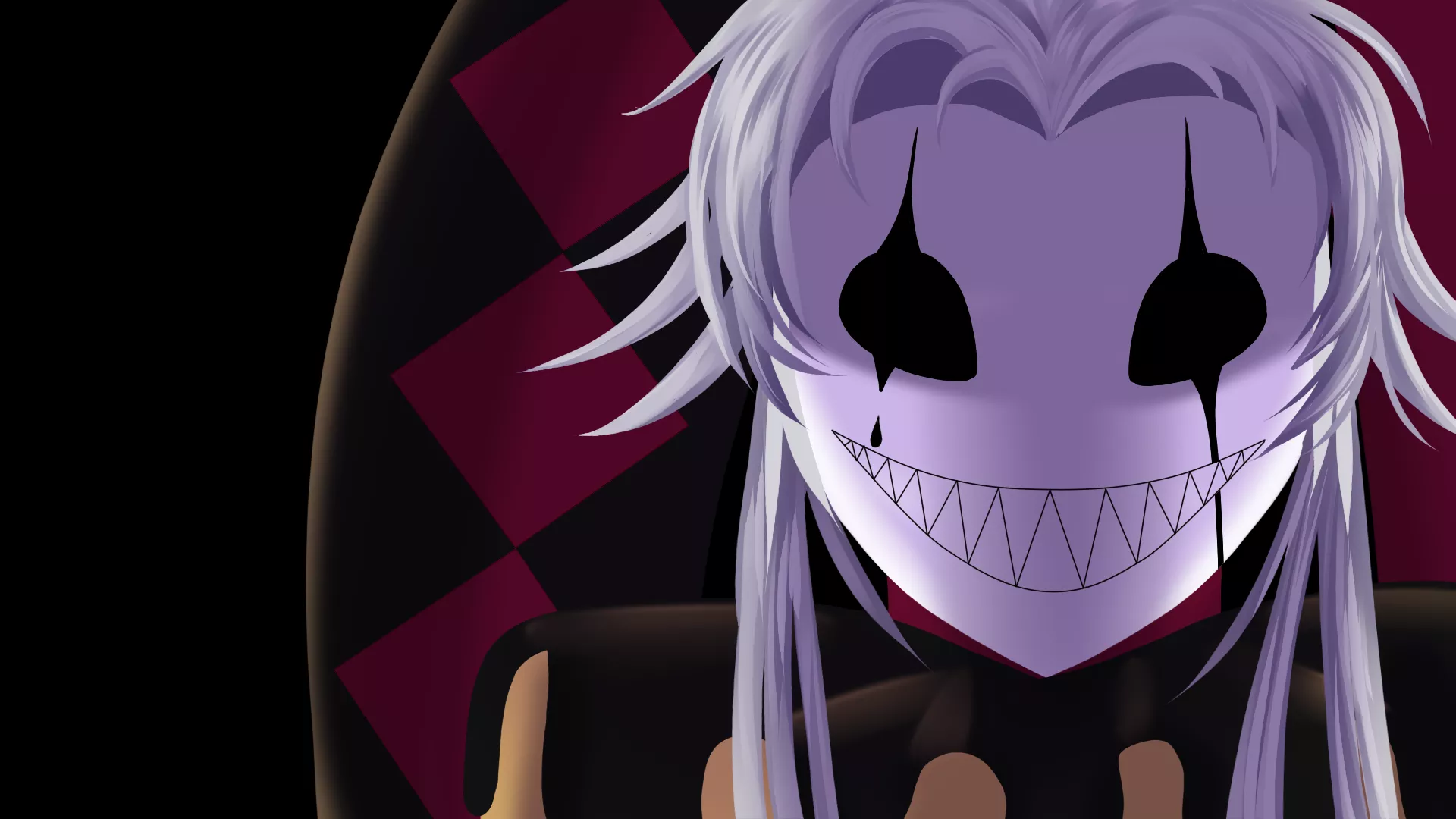
Harlequin vs Pierrot
The Twisted Anatomy of a Toxic Romance
They've been at each other's throats for 300 years. One loved Columbina in silence. The other killed her in jealousy. Now they compete for you — not because they love you, but because winning is the only way to prove the other was wrong. This is the anatomy of gaming's most toxic love triangle.
🎭 The Mirror Image
How They Love
🎭 Pierrot
Through service and sacrifice. He'll die for you. He'll also die without you. His love is an ocean — deep, all-consuming, and likely to drown both of you.
🃏 Harlequin
Through challenge and testing. He'll respect you if you earn it. He'll discard you if you don't. His love is a fire — exciting, warm, and capable of burning everything down.
How They Manipulate
🎭 Pierrot
Guilt. Silence. Tears. He never asks directly — he creates situations where saying 'no' feels like cruelty. You stay because leaving would destroy him, and you can't bear the responsibility.
🃏 Harlequin
Pride. Wit. Dares. He makes you feel special for keeping up with him. You stay because no one else makes you feel as clever, as alive, as worthy of attention.
What They Fear
🎭 Pierrot
Abandonment. Being left alone again. The café scene — where the rude customer ignores him — is his worst nightmare made manifest. He'd rather trap you than experience rejection.
🃏 Harlequin
Irrelevance. Being forgotten. He killed Columbina rather than accept she chose someone else. To be unchosen is worse than being hated — at least hatred is attention.
How They Break
🎭 Pierrot
Quietly. The 'Porcelain Doll' ending shows Pierrot at his worst — not raging, not violent, but coldly, methodically turning you into something that can't leave. His breakdown looks like tenderness.
🃏 Harlequin
Spectacularly. The 'Last Trick' ending shows Harlequin at his worst — theatrical, cruel, turning your rejection into a performance. His breakdown looks like entertainment.
The Columbina Connection
🎭 Pierrot
He loved her genuinely and was loved in return. Her death broke him in a way that 300 years haven't healed. You're his attempt at a second chance — which is unfair to both of you.
🃏 Harlequin
He loved her possessively and was rejected. He killed her rather than lose her. You're his attempt to prove that his way of loving is valid — which requires you to choose him over Pierrot, just as Columbina didn't.
💔 The Triangle That Started It All
The Pierrot-Harlequin-Columbina triangle isn't just backstory — it's the engine that drives every interaction in the game. Understanding it explains why both characters behave the way they do toward you.
The Original Sin
Columbina chose Pierrot. This single decision — made 300 years ago — created a wound that has never healed. For Pierrot, it proved that love was possible. For Harlequin, it proved that love was a competition. When Harlequin killed Columbina, he didn't just commit murder — he froze the argument permanently. Pierrot can never prove his love was returned (Columbina is dead). Harlequin can never prove his love was superior (the competition is over). They're trapped in an eternal stalemate.
You are the tiebreaker. Your choice doesn't just determine your ending — it determines who was "right" about love all along. This is why both characters are so intensely invested in you. It was never really about you. It was always about her.
🪞 You Are a Proxy
The game provides several hints that you aren't seen as an individual by either character — you're a stand-in for Columbina:
Pierrot is instantly drawn to you — unnaturally fast. Because you remind him of her. The music box in the café plays her melody. If you've heard it, Pierrot responds to you differently.
Harlequin tests you the same way he tested Columbina. His 'games' aren't random — they're the same tests she failed (by choosing Pierrot). He needs you to choose differently to validate his worldview.
Neither character asks about your life, your past, or your identity. They project onto you. Pierrot sees gentleness (Columbina's trait). Harlequin sees strength (what he wished Columbina had).
The player character's gender is never specified. You're deliberately blank — a mirror for the performers to see what they want to see.
In the Truth Ending, when Teresa explains the cycle, she says: 'They don't love you. They love what you represent.' This is the most honest line in the game.
⚖️ Who Is Actually Worse?
The community is split on this question, and that's by design. Both are toxic in different — but equally destructive — ways:
The Case Against Pierrot
- • His manipulation is invisible — harder to recognize and resist
- • He creates emotional dependency disguised as care
- • His bad ending shows he'll imprison you "for your own good"
- • He never takes responsibility for his possessiveness
- • His love is a cage made of silk — beautiful but inescapable
The Case Against Harlequin
- • He literally murdered someone he claimed to love
- • His tests are power plays — he needs to feel superior
- • His bad ending turns you into a puppet for entertainment
- • He denies guilt and rationalizes cruelty as "strength"
- • His love is a wildfire — thrilling but ultimately destructive
The Real Answer
Neither is "worse." They're different expressions of the same disease: love distorted by centuries of isolation, grief, and the curse's amplification of their worst traits. Pierrot's love suffocates. Harlequin's love burns. Both are ultimately about the lover's needs, not the beloved's wellbeing. The game's genius is making you pick one anyway.
The Only Healthy Option
The Truth Ending — where you reject both romantic paths and confront Teresa instead — is framed as the "difficult" option. It requires refusing every rose, solving every puzzle, and choosing empathy for the Ringmaster over romance with the performers.
But it's the only ending where you maintain genuine agency. You see both characters for what they are — damaged, dangerous, and in desperate need of healing that you cannot provide. The healthiest thing you can do is acknowledge their pain without becoming consumed by it.
The sickest love triangle in gaming has only one healthy resolution:
refuse to be a point on the triangle.